
Seton Fund of Florida
Beginning with the 2027–2028 school year, a new federal scholarship program may provide additional financial assistance to families choosing Catholic schools. The program creates a new source of funding for scholarships through qualifying Scholarship Granting Organizations.
What Is the Education Freedom Tax Credit (EFTC)?
The education freedom tax credit was established by the One Big Beautiful Bill Act. It provides a 1:1 federal income tax credit to eligible taxpayers who make qualifying cash contributions to participating Scholarship Granting Organizations.
Seton Fund of Florida, Inc.
The Catholic Dioceses of Orlando, Pensacola-Tallahassee, St. Augustine, and St. Petersburg have formed the Seton Fund of Florida to be an SGO for this federal program.
What parents should know:
The program begins with tax year 2027 and scholarships are expected to be available beginning with the 2027–2028 school year.
Scholarships will be administered through Seton Fund of Florida and other SGOs.
Students must meet the federal eligibility requirements to receive scholarships: be eligible to enroll in a public K12 school and live in a household with an income under 300% of the area median gross income.
Families will apply for scholarships through the Seton Fund of Florida; scholarship amounts will be announced at a later date.
Mission
To provide as many scholarships as possible to our Catholic school students.
Prayer
Gracious God, giver of all good gifts, you blessed Saint Elizabeth Ann Seton with gifts of grace as wife and mother, educator and foundress, so that she might spend her life in service to Your people. Through her intercession, may our work on the Seton Fund be completed in alignment with Your most holy will. Through her example and prayers, may this provide abundant graces for and help to meet the material needs of our Catholic school families. Grant us the grace to imitate her faith, charity, and trust in Your providence. We ask this through Christ our Lord. Amen. Saint Elizabeth Ann Seton, pray for us.
Education Freedom Tax Credit (EFTC) FAQ
-
The Education Freedom Tax Credit (EFTC) is a one-to-one federal tax credit that individuals can receive for donating to qualifying scholarship granting organizations (SGOs). An individual may receive up to $1700 in federal tax credit under this program.
-
Individuals anywhere in the United States may receive the tax credit, regardless of which state in which they reside. SGOs to which they donate, however, must be operating in a state whose governor has opted into the program. Crucially, EFTC scholarships can only be given to students in states that have opted in.
-
This website has a tracker regarding the current status of states’ opt-in decisions.
-
The EFTC will go into effect on January 1, 2027. This means that the tax credit would first be available in one’s 2027 tax year filings.
-
It means Catholic families and Catholic schools stand to benefit greatly! As individuals can now receive a tax credit covering 100% of their donation to an SGO up to $1700, there will be significantly more money available to provide as scholarships for students in Catholic schools. This has the potential to significantly increase Catholic school accessibility and affordability in participating states.
-
Yes! Each spouse may donate $1700 independently and then, as a couple, receive a $3400 credit on their jointly filed taxes.
-
No! Students may receive scholarships worth any amount as determined by the SGO, it is simply the tax credit for donors that is capped at $1700.
-
The scholarships can be used for any qualified education expense. These include:
• Tuition, fees, books, supplies, other equipment, academic tutoring, and special needs services for special needs beneficiaries that are incurred by the beneficiary in connection with enrollment or attendance as an elementary or secondary school student at a public, private, or religious school.
• Room and board, uniforms, transportation, and supplementary items and services (including extended day programs) if these expenses are required or provided by a public, private, or religious school in connection with enrollment or attendance.
• Computer technology, equipment, or internet access and related services if used by the beneficiary and the beneficiary's family during any of the years the beneficiary is in elementary or secondary school.
• Further clarifications on eligible expenses will be released by the Treasury in the coming months.
-
No! This is not a voucher program. No money is being taken from state funds in any way. It is a federal tax credit for private donations, which does not affect state money for schools.
-
No, this program is not only for students at private schools. These funds may also be used to help pay for fees that public school students may incur, such as for tutoring or extracurriculars.
-
Student eligibility to receive scholarship funds through the EFTC is determined by the student’s state of residence, not the location of the school. Thus, if a student lives in an opt-in state, but attends school in an opt-out state, they are eligible to receive scholarship funds. Conversely, if a student lives in an opt-out state, but attends school in an opt-in state, they are not eligible to receive scholarship funds.
-
There are certain requirements in order for an SGO to be allowed under the EFTC. Some pertinent ones are as follows:
a. The SGO must be a registered 501(c)(3) organization, and must be authorized to do business in the state where it is dispensing scholarships
b. The SGO must verify that students who receive scholarships have a household income no greater than 300% of the area median household income where they reside.
c. The SGO must grant scholarships to at least 10 students.
Additionally, it must serve students in at least two different schools.d. The SGO cannot allow donors to earmark donations to be given as scholarships for specific students, though we believe donors will be able to earmark donations for specific schools.
e. 90% of an SGOs total receipts, not reduced by income, must be used for EFTC scholarships. If, however, 85% of an SGOs activities are scholarship granting activities, there will be a safe harbor which will measure amounts held only in a segregated account.
-
No. If an SGO meets the parameters as outlined by the Treasury, a governor must allow them to be on the SGO list for their state.
-
The SGOs must prioritize previous recipients of the scholarship and their siblings, as well as ensure that the recipient is eligible according to the 300% area median household income requirement. Outside of those parameters, the SGO may set their own prioritization criteria.
-
Both Catholic and non-Catholic or secular SGOs can be viable options for maximizing the opportunity of the EFTC. One thing to consider, however, is that a Catholic SGO will inherently be more understanding of Catholic teaching and the religious liberty needs/ concerns that come with it, whereas a non-Catholic or secular one could have other priorities that are less in line with Catholic ones.
-
There are a few helpful steps to initiate at the moment:
a. Examine the needs/scale of your diocese. How vast is the network of Catholic schools? If 1%, or 3%, or 5%, etc. of Catholic taxpayers in your diocese donated $1700, how much money would that be?
b. Discuss this with your superintendents and state Catholic Conferences. Which, if any, SGOs does my diocese partner with currently? Are these Catholic or secular SGOs? Are there SGOs currently operating solely in my diocese?
c. Discuss with your superintendents and staff the feasibility of creating your own diocesan SGO. This is something you will have to decide based on the circumstances of your own particular diocese. If you think this is something you would like to pursue, please contact the USCCB Office of the General Counsel for guidance.
d Begin planning the process of communicating this opportunity to those in your diocese. It is critical that the laypeople in your diocese are aware of this opportunity. Perhaps have an announcement/information sheet sent to pastors that can then be disseminated to parishioners. Ensure that principals are informed and can pass on the information to their school families. It will be key to maximize the normal channels of communication in your diocese for this purpose.
-
There are a few helpful steps to initiate at the moment:
a. https://www.ed.gov/media/document/education-freedom-tax-creditfact-sheet-113147.pdf (a quick guide to the EFTC)
b. https://fedscholarshiptaxcredit.org (a comprehensive website regarding the EFTC)
Values and Inspiration
Jesus Christ as the source and model of all charity: Emphasizing the importance of service to others through the grace of God.
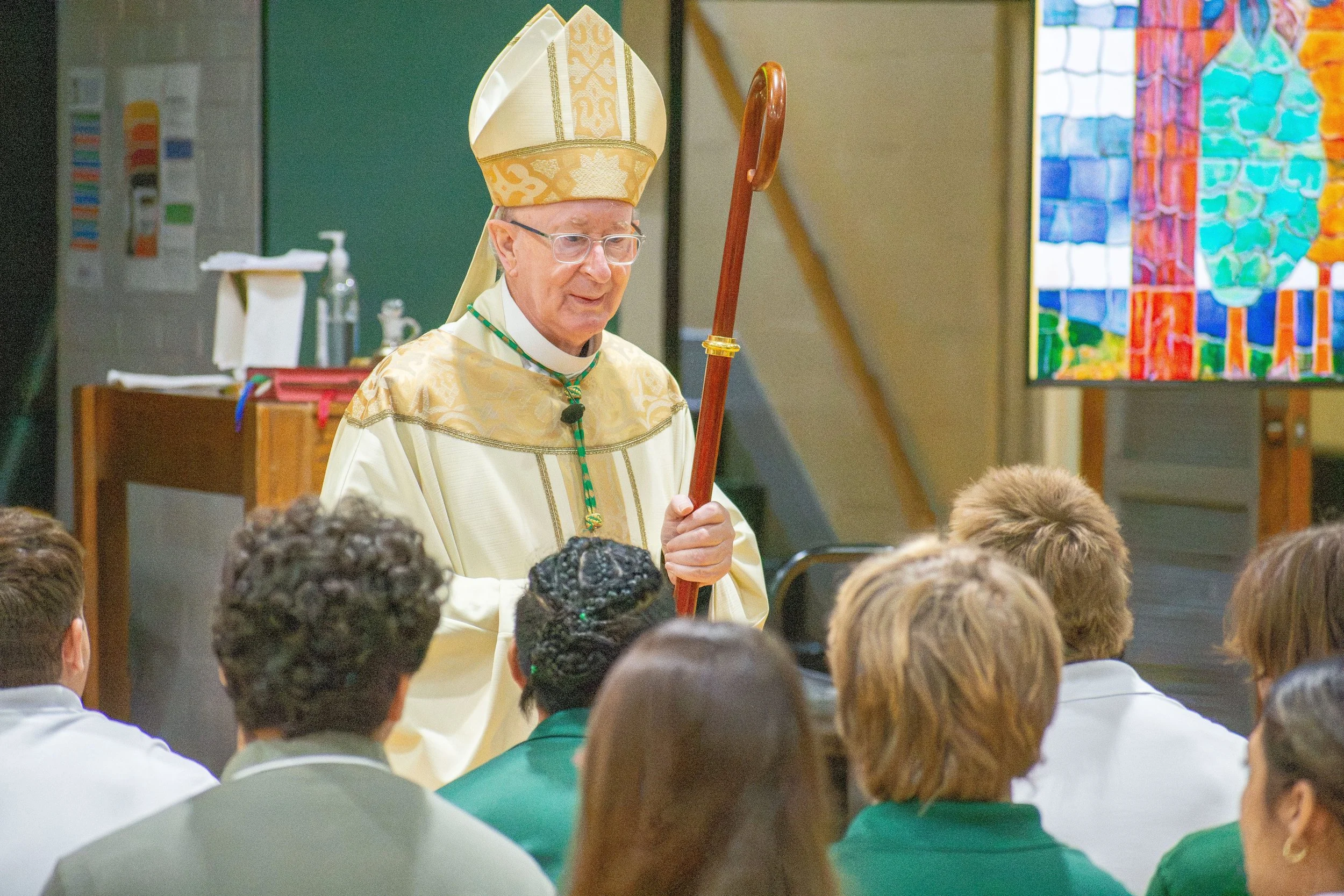
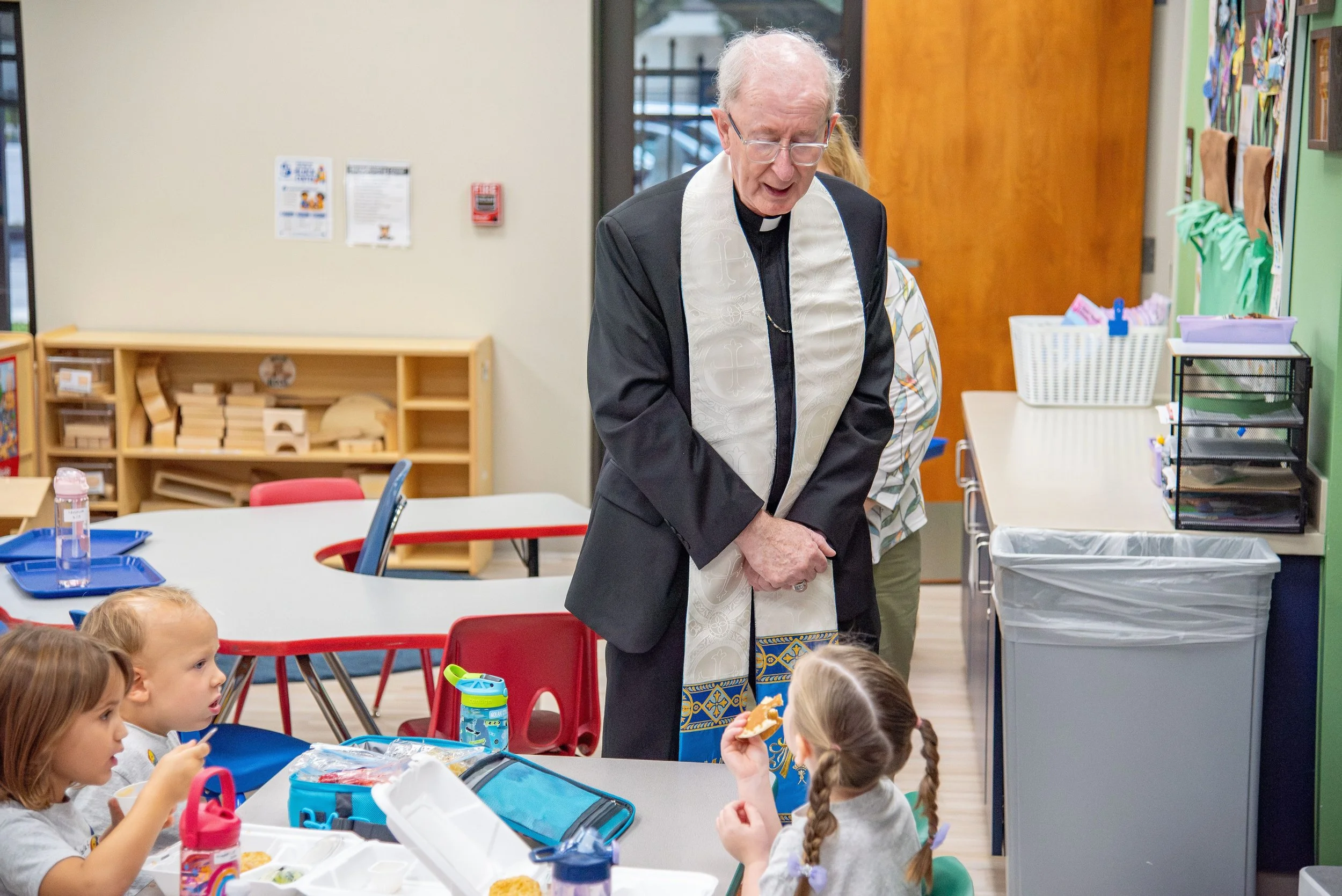
Saint Elizabeth Ann Seton's special concern for children: Inspired by her dedication to providing educational opportunities, especially in religious instruction, for children who lacked such options. She is the patron saint of Catholic Schools.
Key virtues of gentleness, benevolence, and universality: Kindly listening to others, selfless goodwill, and openness to involving others in the process.
Seton Fund FAQ
-
Any K-12 student in a public, charter, or private school, if the student is eligible to enroll in a public school in Florida and the household income does not exceed 300% of area median gross income.
-
It can be used for tuition and fees at a school or other education related expenses to be determined by U.S. Treasury. Seton Fund will only be giving scholarships for tuition and fees in the first year.
-
There are over 500 SGOs. But they must be approved by Florida to operate here and work with our schools. Florida has not published the process for this approval, yet. Principals should not sign up with another SGO at this time. We will be providing more information about this. If you receive an MOU from another SGO, please share that with your superintendent.
-
Taxpayers donate to the Seton Fund through our Odyssey portal. They can select a school (or diocese or give at the Seton level). Families can apply for a scholarship through the Odyssey portal. Odyssey will determine the student’s eligibility (students must be eligible to enroll in a public school in Florida and the household income does not exceed 300% of area median gross income). Seton Fund will award scholarships, prioritizing lower income families. The scholarships will be disbursed to the school bank account through the Odyssey portal.
-
The exact amounts have not been determined, but there will be a high school amount and an elementary school amount. The amount for Morning Star Schools will be the same as the high school amount.
-
At least 90% of the funds donated will be used for scholarships. Once all of the scholarships are funded at a particular school, those funds will be reallocated to the diocese for distribution to other schools and families in need. The funds donated at the diocese and Seton level will be distributed where there is the most need. After the first year of operation, these policies will be reviewed.